Web Design
Extreme Heat
Climate Change - Interactive Web Experience
Year :
2019
Industry :
Climate
Project Duration :
16 weeks
Problem Statement:
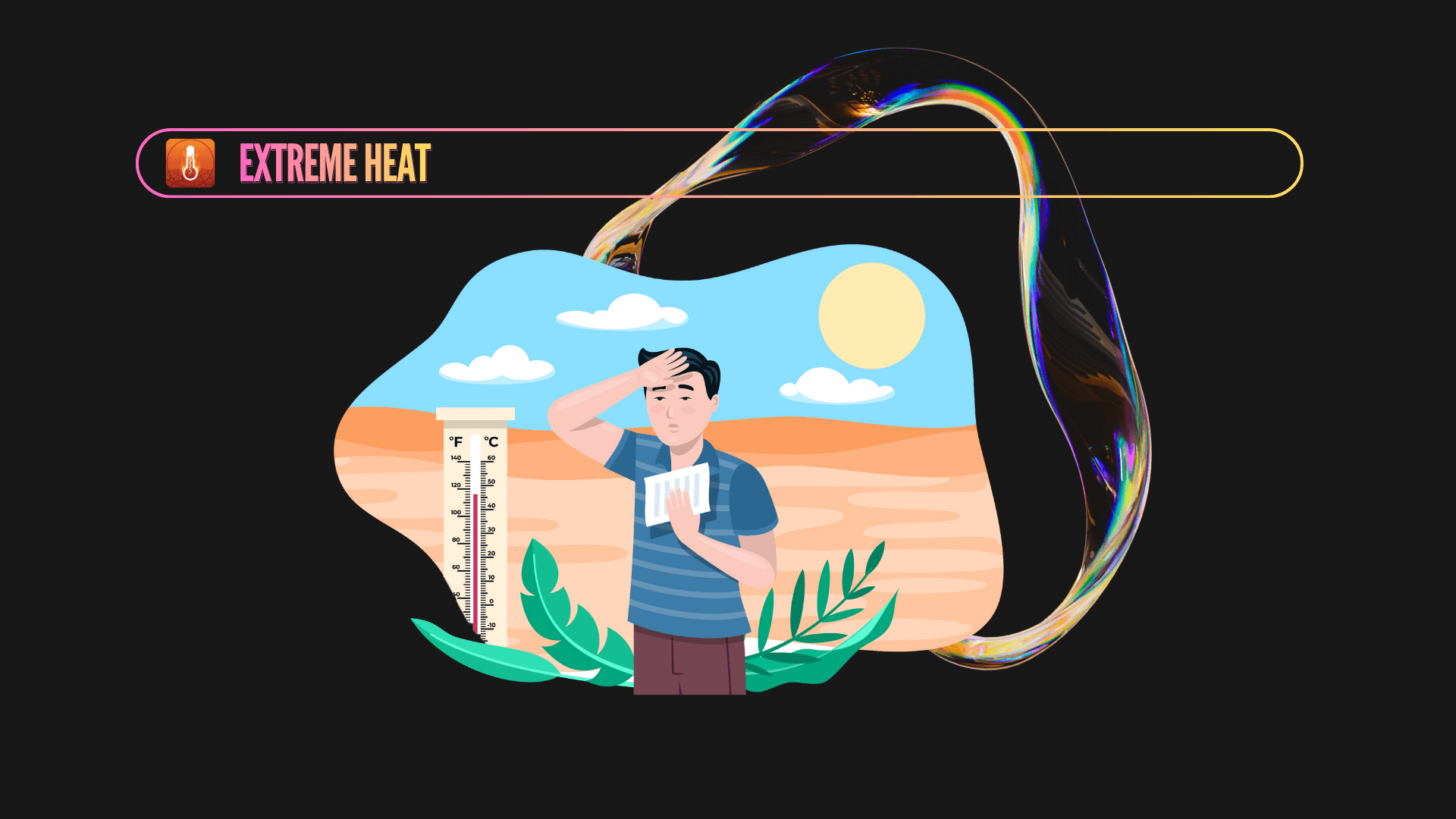
Climate change data is abundant, but most people don't truly understand the urgency or severity of extreme heat's impact on our planet.
While scientific reports and statistics about rising global temperatures are readily available, they often fail to create an emotional connection or sense of urgency needed to inspire action. People see numbers: 1 degree Celsius increase, CO2 levels, projected timelines, but struggle to visualize what these changes actually mean for Earth's ecosystems and human survival.
The ten hottest years on record have all occurred since 1998, yet public engagement with climate action remains inconsistent. The gap between knowing about climate change and feeling compelled to act on it continues to widen.
How might we create an immersive experience that transforms abstract climate data into a visceral, emotional journey that moves people from awareness to action?
Solution Statement:
Extreme Heat is an interactive 3D web experience that transforms users into witnesses of climate catastrophe through a journey controlled by a single, powerful metaphor: a rising thermometer.
Rather than presenting climate data as static facts, the experience places users in control of Earth's fate. By sliding a thermometer interface, users directly cause the planet to heat up, forcing them to confront the consequences of rising temperatures through three devastating stages:
Ice Melting
As temperatures begin to rise, users witness polar ice caps melting through a 3D low-poly island model. The visual transformation makes abstract data about sea level rise tangible and immediate.
Drought
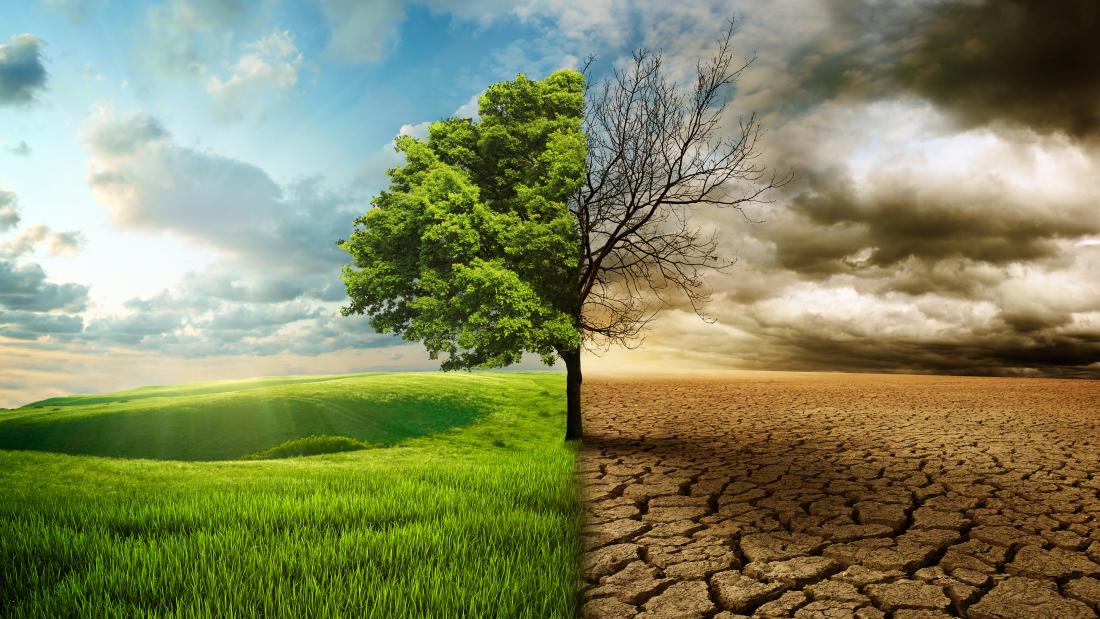
Continuing the temperature increase, the landscape transforms again—water sources dry up, vegetation withers, and the earth cracks under extreme heat. Users see how warming atmospheres extract moisture from soil, creating conditions for widespread drought.
Wildfires
At peak temperatures, the dried landscape ignites. Users witness how extreme heat and drought create perfect conditions for devastating wildfires that consume habitats and threaten communities.
A Glimmer of Hope
The fourth and final model presents an alternative future—a restored, thriving planet that shows what Earth could look like if we act now. This transitions users from fear to agency, providing a clear call to action through 350.org.
Design Choices That Amplify Urgency:
Color-coded emotional journey: Cool blues (ice) → Warning yellows (heat) → Danger reds (fire) → Hopeful greens (action)
Intentionally unsettling logo design that evokes alarm rather than comfort
Progressive disclosure that rewards exploration while building dread
User agency: By making users physically slide the thermometer, they become complicit in the warming—creating a more powerful emotional response than passive observation
Challenge:
How do you make people feel the heat without literally burning them?
Creating an effective climate communication tool required solving several design challenges:
1. Balancing Education with Emotion The experience needed to be scientifically accurate (using data from 350.org and NASA) while also being emotionally provocative. Too much data would overwhelm users; too little would lack credibility. The solution had to inform and inspire fear, the kind that motivates action rather than paralyzes.
2. Visualizing the Invisible Rising temperatures are abstract. Users can't "see" a 1-degree increase. The challenge was translating numerical temperature changes into tangible, visual consequences that users could witness unfolding in real-time as they interact with the experience.
3. Technical Complexity vs. Accessibility Incorporating 3D models in a web environment posed performance challenges. The models needed to be detailed enough to be impactful but optimized enough to load quickly and run smoothly across different devices and browsers.
4. Creating Progressive Impact The experience needed a narrative arc, starting calm and progressively intensifying as users "traveled" through rising temperatures. Each stage had to feel more urgent than the last, building toward a climax that would compel users to take action.
Summary:
Extreme Heat was developed as a solo project for my Computational Media: Interaction Design course in Fall 2019. The project challenged me to combine web development, 3D modeling, and interaction design to create an educational experience about climate change.
My Role: Developer & Designer
I was responsible for the entire project pipeline, from research and concept development through 3D modeling, interface design, and web implementation.
Research & Concept Development
I began by researching climate change data from trusted sources including 350.org, NASA's Climate Portal, and the Center for Climate and Energy Solutions. While the information was comprehensive, I noticed a critical gap: the data was informative but not emotionally engaging. This insight shaped my core approach, to create an experience that would make users feel the urgency, not just understand it intellectually.
Through my research, I identified three major impacts of extreme heat that had clear visual potential: ice melting, droughts, and wildfires. These became the foundation of my narrative structure.
Planning the User Journey
I created detailed flowcharts and storyboards to map the user experience. The key insight was using a thermometer as both a navigation tool and a metaphor, users would literally control Earth's temperature, making them active participants rather than passive observers. This interaction model created a sense of agency and, more importantly, responsibility.
Visual Design & Interface
The UI design was critical to building emotional impact. I developed a color palette system where each climate stage had its own color identity, creating visual progression from cool (safe) to hot (dangerous). Typography choices balanced readability with urgency, clean enough for information absorption, bold enough to command attention.
The logo design was intentionally alarming. My goal was to make users feel "scared and afraid"—not for shock value, but to break through the apathy that often surrounds climate discussions.
3D Modeling in Blender
Learning to create and optimize 3D models was one of the project's biggest technical challenges. I initially created a simple low-poly island but realized it lacked the spatial complexity to tell the full story. I iterated to a more detailed model that could effectively demonstrate transformation across all three climate stages while maintaining web performance.
I created four distinct 3D models:
Initial state (normal climate)
Ice melting stage
Drought stage
Wildfire stage
Restored future (hope/action)
Each model was optimized for web delivery, balancing visual impact with file size and rendering performance.
Development & Implementation
Bringing the 3D models into a functional web experience required careful technical implementation. I focused on creating smooth slider interactions that felt responsive and gave users control over the pacing of their journey. The challenge was ensuring the experience worked across different browsers and devices while maintaining the visual fidelity of the 3D models.
Testing & Refinement
Throughout development, I tested the experience to ensure the emotional arc was effective, that users felt increasingly concerned as they progressed through the temperature stages, culminating in a moment of hope that motivated action rather than despair.
Results & Reflection
An Immersive Journey That Makes Climate Change Personal
The final interactive experience successfully transformed abstract climate data into a visceral, emotional journey. Users reported feeling more connected to the urgency of climate action after experiencing the direct cause-and-effect relationship between rising temperatures and environmental catastrophe.
Key Outcomes:
Created a functional interactive web experience combining 3D graphics with educational content
Demonstrated proficiency in Blender 3D modeling and web-based 3D rendering
Successfully translated complex climate science into an accessible, emotionally engaging format
Designed a user interface that balanced information delivery with emotional impact
What I Learned:
This project taught me the power of interaction design in educational contexts. By giving users agency, letting them control the thermometer, the experience became far more impactful than a linear presentation of the same information. I also gained valuable technical skills in 3D modeling and optimization for web platforms.
Looking Forward:
If I were to revisit this project, I would expand it to include more granular climate impacts (such as the illness/death and habitat loss sections that were planned but not fully developed) and add data visualizations showing real-time statistics alongside the visual transformations. I'd also explore adding sound design to enhance the emotional journey, the crack of ice, the crackle of flames, the silence of drought.
Web Design
Extreme Heat
Climate Change - Interactive Web Experience
Year :
2019
Industry :
Climate
Project Duration :
16 weeks
Problem Statement:
Climate change data is abundant, but most people don't truly understand the urgency or severity of extreme heat's impact on our planet.
While scientific reports and statistics about rising global temperatures are readily available, they often fail to create an emotional connection or sense of urgency needed to inspire action. People see numbers: 1 degree Celsius increase, CO2 levels, projected timelines, but struggle to visualize what these changes actually mean for Earth's ecosystems and human survival.
The ten hottest years on record have all occurred since 1998, yet public engagement with climate action remains inconsistent. The gap between knowing about climate change and feeling compelled to act on it continues to widen.
How might we create an immersive experience that transforms abstract climate data into a visceral, emotional journey that moves people from awareness to action?
Solution Statement:
Extreme Heat is an interactive 3D web experience that transforms users into witnesses of climate catastrophe through a journey controlled by a single, powerful metaphor: a rising thermometer.
Rather than presenting climate data as static facts, the experience places users in control of Earth's fate. By sliding a thermometer interface, users directly cause the planet to heat up, forcing them to confront the consequences of rising temperatures through three devastating stages:
Ice Melting
As temperatures begin to rise, users witness polar ice caps melting through a 3D low-poly island model. The visual transformation makes abstract data about sea level rise tangible and immediate.
Drought
Continuing the temperature increase, the landscape transforms again—water sources dry up, vegetation withers, and the earth cracks under extreme heat. Users see how warming atmospheres extract moisture from soil, creating conditions for widespread drought.
Wildfires
At peak temperatures, the dried landscape ignites. Users witness how extreme heat and drought create perfect conditions for devastating wildfires that consume habitats and threaten communities.
A Glimmer of Hope
The fourth and final model presents an alternative future—a restored, thriving planet that shows what Earth could look like if we act now. This transitions users from fear to agency, providing a clear call to action through 350.org.
Design Choices That Amplify Urgency:
Color-coded emotional journey: Cool blues (ice) → Warning yellows (heat) → Danger reds (fire) → Hopeful greens (action)
Intentionally unsettling logo design that evokes alarm rather than comfort
Progressive disclosure that rewards exploration while building dread
User agency: By making users physically slide the thermometer, they become complicit in the warming—creating a more powerful emotional response than passive observation
Challenge:
How do you make people feel the heat without literally burning them?
Creating an effective climate communication tool required solving several design challenges:
1. Balancing Education with Emotion The experience needed to be scientifically accurate (using data from 350.org and NASA) while also being emotionally provocative. Too much data would overwhelm users; too little would lack credibility. The solution had to inform and inspire fear, the kind that motivates action rather than paralyzes.
2. Visualizing the Invisible Rising temperatures are abstract. Users can't "see" a 1-degree increase. The challenge was translating numerical temperature changes into tangible, visual consequences that users could witness unfolding in real-time as they interact with the experience.
3. Technical Complexity vs. Accessibility Incorporating 3D models in a web environment posed performance challenges. The models needed to be detailed enough to be impactful but optimized enough to load quickly and run smoothly across different devices and browsers.
4. Creating Progressive Impact The experience needed a narrative arc, starting calm and progressively intensifying as users "traveled" through rising temperatures. Each stage had to feel more urgent than the last, building toward a climax that would compel users to take action.
Summary:
Extreme Heat was developed as a solo project for my Computational Media: Interaction Design course in Fall 2019. The project challenged me to combine web development, 3D modeling, and interaction design to create an educational experience about climate change.
My Role: Developer & Designer
I was responsible for the entire project pipeline, from research and concept development through 3D modeling, interface design, and web implementation.
Research & Concept Development
I began by researching climate change data from trusted sources including 350.org, NASA's Climate Portal, and the Center for Climate and Energy Solutions. While the information was comprehensive, I noticed a critical gap: the data was informative but not emotionally engaging. This insight shaped my core approach, to create an experience that would make users feel the urgency, not just understand it intellectually.
Through my research, I identified three major impacts of extreme heat that had clear visual potential: ice melting, droughts, and wildfires. These became the foundation of my narrative structure.
Planning the User Journey
I created detailed flowcharts and storyboards to map the user experience. The key insight was using a thermometer as both a navigation tool and a metaphor, users would literally control Earth's temperature, making them active participants rather than passive observers. This interaction model created a sense of agency and, more importantly, responsibility.
Visual Design & Interface
The UI design was critical to building emotional impact. I developed a color palette system where each climate stage had its own color identity, creating visual progression from cool (safe) to hot (dangerous). Typography choices balanced readability with urgency, clean enough for information absorption, bold enough to command attention.
The logo design was intentionally alarming. My goal was to make users feel "scared and afraid"—not for shock value, but to break through the apathy that often surrounds climate discussions.
3D Modeling in Blender
Learning to create and optimize 3D models was one of the project's biggest technical challenges. I initially created a simple low-poly island but realized it lacked the spatial complexity to tell the full story. I iterated to a more detailed model that could effectively demonstrate transformation across all three climate stages while maintaining web performance.
I created four distinct 3D models:
Initial state (normal climate)
Ice melting stage
Drought stage
Wildfire stage
Restored future (hope/action)
Each model was optimized for web delivery, balancing visual impact with file size and rendering performance.
Development & Implementation
Bringing the 3D models into a functional web experience required careful technical implementation. I focused on creating smooth slider interactions that felt responsive and gave users control over the pacing of their journey. The challenge was ensuring the experience worked across different browsers and devices while maintaining the visual fidelity of the 3D models.
Testing & Refinement
Throughout development, I tested the experience to ensure the emotional arc was effective, that users felt increasingly concerned as they progressed through the temperature stages, culminating in a moment of hope that motivated action rather than despair.
Results & Reflection
An Immersive Journey That Makes Climate Change Personal
The final interactive experience successfully transformed abstract climate data into a visceral, emotional journey. Users reported feeling more connected to the urgency of climate action after experiencing the direct cause-and-effect relationship between rising temperatures and environmental catastrophe.
Key Outcomes:
Created a functional interactive web experience combining 3D graphics with educational content
Demonstrated proficiency in Blender 3D modeling and web-based 3D rendering
Successfully translated complex climate science into an accessible, emotionally engaging format
Designed a user interface that balanced information delivery with emotional impact
What I Learned:
This project taught me the power of interaction design in educational contexts. By giving users agency, letting them control the thermometer, the experience became far more impactful than a linear presentation of the same information. I also gained valuable technical skills in 3D modeling and optimization for web platforms.
Looking Forward:
If I were to revisit this project, I would expand it to include more granular climate impacts (such as the illness/death and habitat loss sections that were planned but not fully developed) and add data visualizations showing real-time statistics alongside the visual transformations. I'd also explore adding sound design to enhance the emotional journey, the crack of ice, the crackle of flames, the silence of drought.
Web Design
Extreme Heat
Climate Change - Interactive Web Experience
Year :
2019
Industry :
Climate
Project Duration :
16 weeks
Problem Statement:
Climate change data is abundant, but most people don't truly understand the urgency or severity of extreme heat's impact on our planet.
While scientific reports and statistics about rising global temperatures are readily available, they often fail to create an emotional connection or sense of urgency needed to inspire action. People see numbers: 1 degree Celsius increase, CO2 levels, projected timelines, but struggle to visualize what these changes actually mean for Earth's ecosystems and human survival.
The ten hottest years on record have all occurred since 1998, yet public engagement with climate action remains inconsistent. The gap between knowing about climate change and feeling compelled to act on it continues to widen.
How might we create an immersive experience that transforms abstract climate data into a visceral, emotional journey that moves people from awareness to action?
Solution Statement:
Extreme Heat is an interactive 3D web experience that transforms users into witnesses of climate catastrophe through a journey controlled by a single, powerful metaphor: a rising thermometer.
Rather than presenting climate data as static facts, the experience places users in control of Earth's fate. By sliding a thermometer interface, users directly cause the planet to heat up, forcing them to confront the consequences of rising temperatures through three devastating stages:
Ice Melting
As temperatures begin to rise, users witness polar ice caps melting through a 3D low-poly island model. The visual transformation makes abstract data about sea level rise tangible and immediate.
Drought
Continuing the temperature increase, the landscape transforms again—water sources dry up, vegetation withers, and the earth cracks under extreme heat. Users see how warming atmospheres extract moisture from soil, creating conditions for widespread drought.
Wildfires
At peak temperatures, the dried landscape ignites. Users witness how extreme heat and drought create perfect conditions for devastating wildfires that consume habitats and threaten communities.
A Glimmer of Hope
The fourth and final model presents an alternative future—a restored, thriving planet that shows what Earth could look like if we act now. This transitions users from fear to agency, providing a clear call to action through 350.org.
Design Choices That Amplify Urgency:
Color-coded emotional journey: Cool blues (ice) → Warning yellows (heat) → Danger reds (fire) → Hopeful greens (action)
Intentionally unsettling logo design that evokes alarm rather than comfort
Progressive disclosure that rewards exploration while building dread
User agency: By making users physically slide the thermometer, they become complicit in the warming—creating a more powerful emotional response than passive observation
Challenge:
How do you make people feel the heat without literally burning them?
Creating an effective climate communication tool required solving several design challenges:
1. Balancing Education with Emotion The experience needed to be scientifically accurate (using data from 350.org and NASA) while also being emotionally provocative. Too much data would overwhelm users; too little would lack credibility. The solution had to inform and inspire fear, the kind that motivates action rather than paralyzes.
2. Visualizing the Invisible Rising temperatures are abstract. Users can't "see" a 1-degree increase. The challenge was translating numerical temperature changes into tangible, visual consequences that users could witness unfolding in real-time as they interact with the experience.
3. Technical Complexity vs. Accessibility Incorporating 3D models in a web environment posed performance challenges. The models needed to be detailed enough to be impactful but optimized enough to load quickly and run smoothly across different devices and browsers.
4. Creating Progressive Impact The experience needed a narrative arc, starting calm and progressively intensifying as users "traveled" through rising temperatures. Each stage had to feel more urgent than the last, building toward a climax that would compel users to take action.
Summary:
Extreme Heat was developed as a solo project for my Computational Media: Interaction Design course in Fall 2019. The project challenged me to combine web development, 3D modeling, and interaction design to create an educational experience about climate change.
My Role: Developer & Designer
I was responsible for the entire project pipeline, from research and concept development through 3D modeling, interface design, and web implementation.
Research & Concept Development
I began by researching climate change data from trusted sources including 350.org, NASA's Climate Portal, and the Center for Climate and Energy Solutions. While the information was comprehensive, I noticed a critical gap: the data was informative but not emotionally engaging. This insight shaped my core approach, to create an experience that would make users feel the urgency, not just understand it intellectually.
Through my research, I identified three major impacts of extreme heat that had clear visual potential: ice melting, droughts, and wildfires. These became the foundation of my narrative structure.
Planning the User Journey
I created detailed flowcharts and storyboards to map the user experience. The key insight was using a thermometer as both a navigation tool and a metaphor, users would literally control Earth's temperature, making them active participants rather than passive observers. This interaction model created a sense of agency and, more importantly, responsibility.
Visual Design & Interface
The UI design was critical to building emotional impact. I developed a color palette system where each climate stage had its own color identity, creating visual progression from cool (safe) to hot (dangerous). Typography choices balanced readability with urgency, clean enough for information absorption, bold enough to command attention.
The logo design was intentionally alarming. My goal was to make users feel "scared and afraid"—not for shock value, but to break through the apathy that often surrounds climate discussions.
3D Modeling in Blender
Learning to create and optimize 3D models was one of the project's biggest technical challenges. I initially created a simple low-poly island but realized it lacked the spatial complexity to tell the full story. I iterated to a more detailed model that could effectively demonstrate transformation across all three climate stages while maintaining web performance.
I created four distinct 3D models:
Initial state (normal climate)
Ice melting stage
Drought stage
Wildfire stage
Restored future (hope/action)
Each model was optimized for web delivery, balancing visual impact with file size and rendering performance.
Development & Implementation
Bringing the 3D models into a functional web experience required careful technical implementation. I focused on creating smooth slider interactions that felt responsive and gave users control over the pacing of their journey. The challenge was ensuring the experience worked across different browsers and devices while maintaining the visual fidelity of the 3D models.
Testing & Refinement
Throughout development, I tested the experience to ensure the emotional arc was effective, that users felt increasingly concerned as they progressed through the temperature stages, culminating in a moment of hope that motivated action rather than despair.
Results & Reflection
An Immersive Journey That Makes Climate Change Personal
The final interactive experience successfully transformed abstract climate data into a visceral, emotional journey. Users reported feeling more connected to the urgency of climate action after experiencing the direct cause-and-effect relationship between rising temperatures and environmental catastrophe.
Key Outcomes:
Created a functional interactive web experience combining 3D graphics with educational content
Demonstrated proficiency in Blender 3D modeling and web-based 3D rendering
Successfully translated complex climate science into an accessible, emotionally engaging format
Designed a user interface that balanced information delivery with emotional impact
What I Learned:
This project taught me the power of interaction design in educational contexts. By giving users agency, letting them control the thermometer, the experience became far more impactful than a linear presentation of the same information. I also gained valuable technical skills in 3D modeling and optimization for web platforms.
Looking Forward:
If I were to revisit this project, I would expand it to include more granular climate impacts (such as the illness/death and habitat loss sections that were planned but not fully developed) and add data visualizations showing real-time statistics alongside the visual transformations. I'd also explore adding sound design to enhance the emotional journey, the crack of ice, the crackle of flames, the silence of drought.